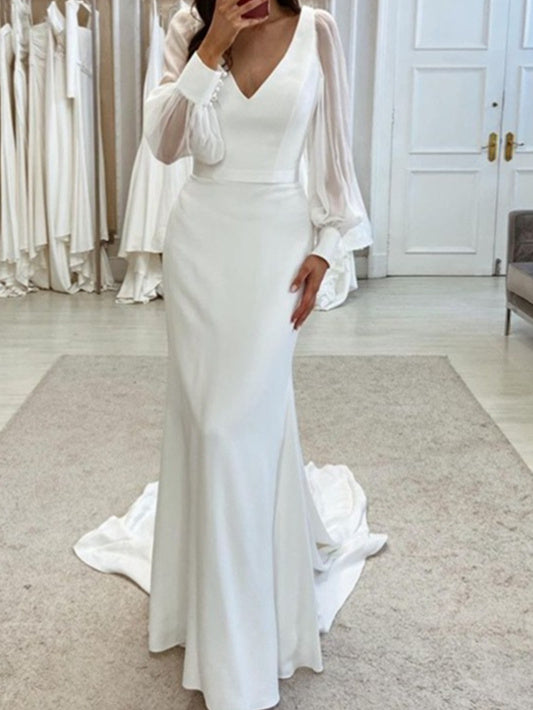
The best wedding dress neckline is the one that feels secure, suits the level of coverage you want, and works with the gown’s overall shape. Start by considering support and comfort before visual effect. A neckline can frame the face beautifully, but you should also be able to sit, hug, breathe, and move through the day without adjusting it.
Begin with comfort and support
Necklines are often discussed as a style choice, yet their practical job matters just as much. Bring the undergarments or support solution you expect to wear to a fitting, and move naturally while assessing the bodice. If a neckline gaps, pinches, or needs repeated repositioning, ask what the alteration can realistically change before treating it as a minor detail.
Think about the wedding day, not only the mirror
Consider the ceremony, portraits, dinner, and dancing as separate moments. A deeper opening may feel different when you lean forward to greet family or raise your arms on the dance floor. For a fuller guide to shape through the skirt and hips, see our wedding dress silhouettes guide.
Match coverage to your own preference
There is no universally flattering amount of coverage. A higher neckline can feel sleek and contained; a V-neck can create an open vertical line; straps or sleeves may add the security you want. Choose based on what makes you feel present, not on a rule about what a bride “should” wear.
Compare common wedding dress necklines
Use broad neckline names as a starting point, then judge the exact cut on the actual gown. The depth, strap placement, fabric, and built-in structure can make two dresses with the same label feel very different.
V-neck
A V-neck can range from gently open to more dramatic. It often gives the eye a vertical path, but comfort depends on how the bodice is constructed and where the V begins. The long-sleeve V-neck wedding dress is a useful product page to review if you want to see how sleeves and a V neckline can work together.
Square neck
Square necklines create a clean, structured frame across the upper body. They can feel especially balanced with wider straps, though the shoulder fit is important: check that the straps do not slide outward or restrict reaching.
Sweetheart and strapless shapes
A sweetheart curve and other strapless shapes can feel romantic and open, but they rely on a precise fit through the ribcage and bodice. Use the movement check during a fitting, and discuss any support questions with a qualified alterations professional.
High, illusion, and covered necklines
Higher necklines can offer more coverage without requiring a heavy look. Sheer or illusion details vary greatly in appearance, so view them in normal daylight and in photos if possible. A neckline with sleeves can also be a practical direction for a cooler ceremony; our long-sleeve wedding dress guide explains the broader considerations.
Pair the neckline with the rest of the gown
The neckline does not need to “correct” your body. It should make sense with the dress’s shoulder line, waist, skirt volume, and setting. A deeper V may feel airy with a tulle A-line, while a more covered top can bring balance to a fitted silhouette. The deep V-neck tulle A-line wedding dress offers another real product reference when you are comparing those choices.
Use accessories after the dress feels right
Necklaces, veils, earrings, and hairstyle should support the neckline rather than force it into a different role. Try only one or two accessory ideas at a time. If the top of the gown already has visible detail, simpler jewelry may let the dress read clearly.
Keep venue and weather in view
Indoor formality, outdoor wind, ceremony temperature, and travel all affect what feels easy to wear. For an outdoor setting, it can help to review our beach wedding dress guide and then apply the same movement-first thinking to your own venue.
A quick fitting checklist
Before deciding, take a few minutes to check these practical questions:
- Can you breathe, sit, hug someone, and lift your arms comfortably?
- Does the neckline stay in place without constant attention?
- Do the straps, sleeves, or edges feel smooth against your skin?
- Does the amount of coverage feel right for your ceremony and for you?
- Can the planned veil and jewelry be added without making the upper body feel busy?
Frequently asked questions
Which wedding dress neckline is most versatile?
There is no single best option. A moderate V-neck, square neck, or soft sweetheart can all work across many venues when the fit is secure. Focus on the exact gown and the confidence it gives you.
Can a neckline be changed during alterations?
Sometimes small adjustments are possible, but a major neckline change can affect structure, straps, lining, and the overall fit. Ask an experienced alterations professional to assess the specific gown before relying on a change.
Should I choose the neckline before the silhouette?
You can begin with either preference, but assess both together. The neckline, bodice, and skirt create one look, so a favorite neckline may feel different once it is paired with a different silhouette.