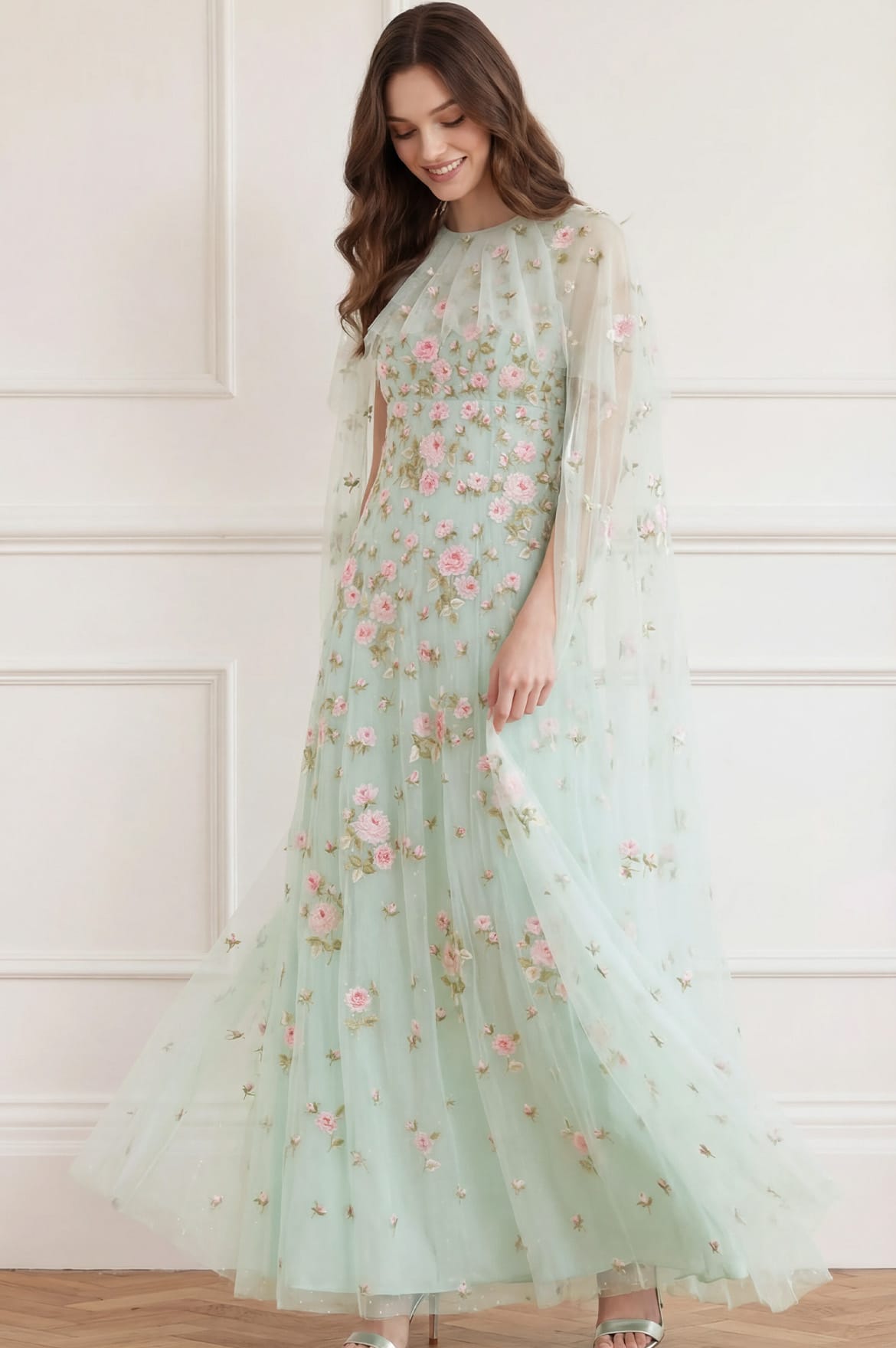
If you have a wedding to attend, the invitation is your best styling clue. Start with the dress code, then consider the ceremony time, venue, season, and how much movement the celebration will involve. A formal outfit should feel elevated without competing with the couple—and it should be comfortable enough for dinner, photographs, and the dance floor.
The short answer: choose an elegant floor-length or midi gown
For a formal wedding, a floor-length gown is the safest choice. A refined midi dress also works when the invitation says “formal,” “black-tie optional,” or “cocktail,” especially for a daytime or warm-weather celebration. Choose a polished fabric such as satin, crepe, chiffon, velvet, lace, or restrained beadwork.
If the invitation says black tie, lean toward a floor-length evening gown and dressier accessories. If it says formal attire, you have a little more flexibility: a sophisticated midi, a sleek column silhouette, or a softly draped A-line can all be appropriate. Formal sits between cocktail and black tie, so the invitation’s exact wording matters. Emily Post recommends considering the setting and time of day alongside the invitation’s attire guidance, while The Knot places formal attire between cocktail and black tie.
A simple way to decode the invitation
| Dress code | A strong formal outfit choice | Keep in mind |
|---|---|---|
| Black tie | Floor-length gown in satin, velvet, chiffon, or refined embellishment | Add elegant jewelry and a small clutch |
| Black tie optional | Floor-length gown or elevated midi | Choose the longer hem if you are unsure |
| Formal | Full-length gown, tailored midi, or dressy column silhouette | Keep the fabric and finish evening-ready |
| Cocktail | Polished knee-length or midi dress | Avoid making a ball gown feel too heavy |
| Semi-formal | Dressy midi, wrap dress, or tailored separates | Lighter fabrics and simpler accessories work well |
When the wording is unclear, ask the couple or wedding party. It is more helpful to clarify than to arrive substantially overdressed or underdressed.
Three formal outfit directions to consider
1. The classic black or jewel-tone gown
Black, navy, emerald, burgundy, and deep blue are reliable choices for evening weddings. A clean neckline and a long hem create polish without requiring a lot of styling. For a dramatic but restrained look, consider the Alayna strapless layered tulle steel-blue gown. Its cool tone photographs beautifully and pairs naturally with silver jewelry or crystal accessories.
For a black-tie setting, a black gown with texture is more memorable than a plain column. The Adi shimmer corset black wedding dress brings subtle shine while keeping the silhouette formal. Style it with a small metallic clutch, simple earrings, and shoes you can comfortably wear for several hours.
2. A soft color with a formal silhouette
You do not have to wear black to look formal. Sage, dusty blue, rose, and other softened colors can feel especially beautiful for garden, spring, and destination weddings. Look for a structured bodice, a deliberate hemline, and a fabric with enough drape to read as occasionwear.
The Alessa sage tulle floral-appliqué gown is a good direction when you want color and romance without a loud print. Keep the accessories light: pearl or silver earrings, a neutral heel, and a compact bag let the dress remain the focal point.
3. A statement shape in a lighter tone
Formal does not mean stiff. A strapless or softly sculpted A-line can feel celebratory while still giving you room to move. Light blue, champagne, and muted metallics work well for daytime receptions, ballroom weddings, and summer events—provided they are clearly distinct from bridal white or ivory.
For a more dramatic entrance, explore the Arden strapless layered tulle light-blue gown. Pair a fuller skirt with understated jewelry and a neat updo so the overall look stays balanced.
Color rules that keep the outfit wedding-appropriate
- Avoid white, ivory, and very pale shades that could read as bridal in photographs.
- Black is generally appropriate, particularly for evening and formal weddings.
- Jewel tones are an easy choice for fall and winter.
- Soft pastels and botanical shades suit spring, summer, and garden settings.
- If the couple has shared a wedding palette, avoid matching the bridesmaids exactly unless they have invited guests to do so.
- Red can be beautiful, but consider the couple’s palette and the formality of the venue before choosing a very bright shade.
Finish the outfit with the right accessories
Formal dressing is a complete look, not only a dress. Choose shoes that are elegant but stable enough for standing and dancing. A small clutch is more practical than a large everyday bag. Add one focal accessory—statement earrings, a bracelet, or a refined hair piece—rather than competing accessories at every point.
Bring a wrap or tailored layer for religious ceremonies, cool evenings, or heavily air-conditioned venues. If you are ordering made-to-order, allow four to six weeks for production plus shipping, and include your planned heel height with your measurements so the hem works with your shoes.
A last-minute checklist
Before you commit to the outfit, confirm:
- The dress code and ceremony time.
- Whether the venue includes grass, gravel, stairs, or a religious ceremony.
- The return or alteration window.
- Your size and the expected production timeline.
- That you can sit, walk, and dance comfortably.
The best formal wedding guest outfit is the one that respects the invitation, feels like you, and lets you be fully present for the celebration. Start with the dress code, choose a polished silhouette, and let color, texture, and accessories express your personal style.
Related: [What to wear for every wedding dress code →](/blog/wedding-guest-dress-guide)