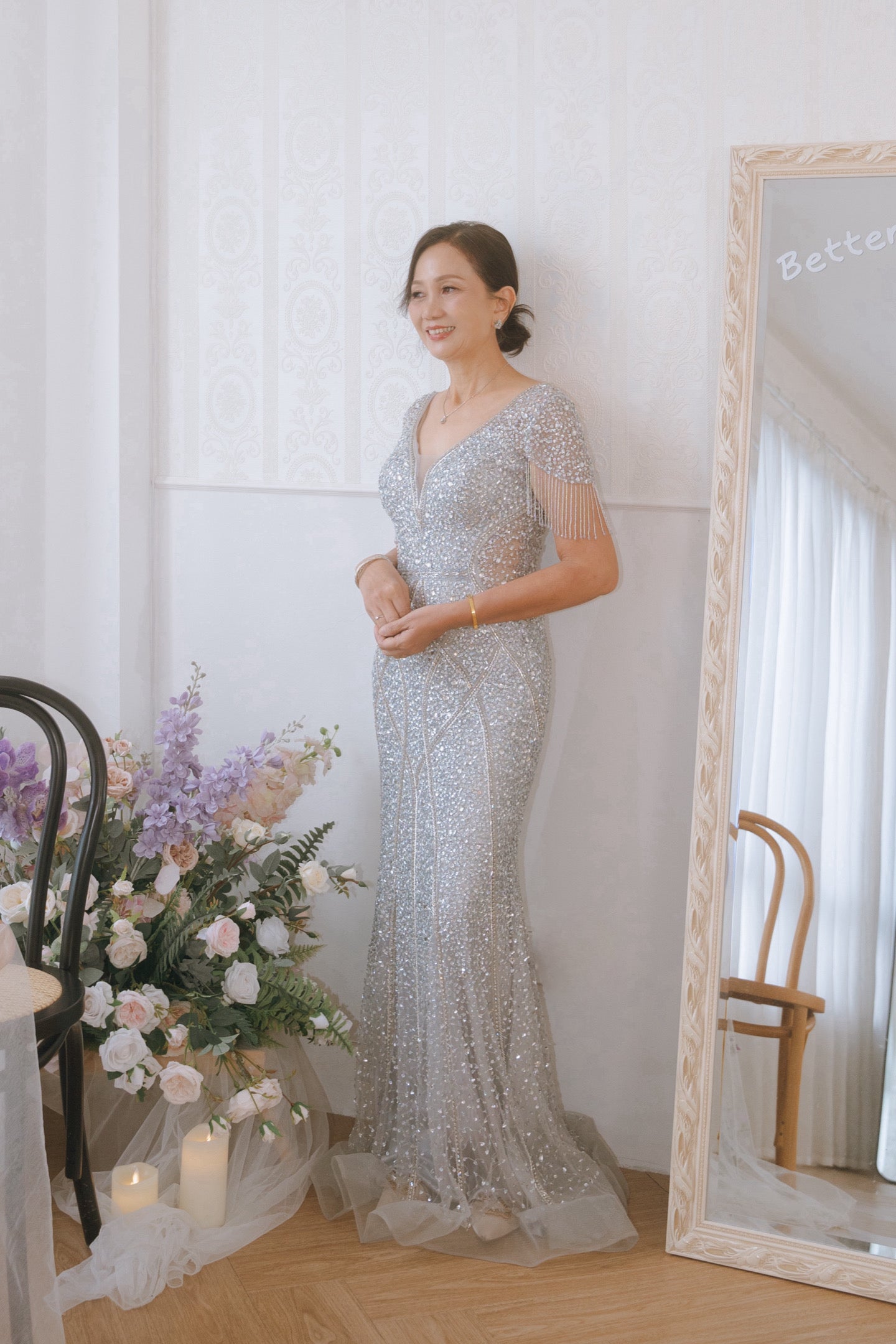
For a petite mother of the bride, the most useful fit checks are waist placement, bodice length, skirt volume, and hem rather than a list of forbidden silhouettes. A dress can be shortened, but misplaced seams and oversized details are harder to correct. Start with accurate measurements, then choose a gown whose proportions already sit close to the right places.
Petite fit is more than overall height
Two women of the same height may have different torso, rise, and leg proportions. Standard sizing usually grades width and length together, so the waist seam or neckline may sit too low even when the circumference is correct.
Measure bust, natural waist, hips, hollow to floor, and shoulder to waist. Compare those numbers with the product chart and the standard versus custom sizing guide. If made-to-order is available for a selected style, use the measuring guide to reduce inconsistent measurements.
Prioritize the hardest areas to alter
Place the waist correctly
A defined waist can create clear proportion, but only if the seam meets your natural waist. If it sits several inches too low, shortening the hem will not solve the bodice length.
Keep the neckline in scale
V-necks, scoop necks, and open necklines can create visual space, while high necklines can work when shoulders and sleeve length fit correctly. The goal is not to “look taller”; it is to keep the neckline secure and balanced.
Control skirt volume
Full skirts are possible on petite frames, but excess width and length may overwhelm the wearer or require costly reconstruction. A-line, column, and softly flared shapes are often simpler to proportion because alterations can focus on hem and bodice fit.
Evaluate a full-length gown before buying
Look at where embellishment ends, where the skirt begins, and whether the design can be shortened without cutting through a border. Ask an alterations professional before ordering if the hem has lace, scallops, or dense beading.
The Cleona Silver Mother of the Bride Gown offers one formal silhouette to evaluate for waist placement and hem. The Briallen Dusty Blue Mother of the Bride Gown provides another color and construction direction. Confirm live measurements, options, and alteration feasibility before ordering.
The broader mother of the bride dress guide can help align the final choice with venue and dress code.
Build an alteration plan before the deadline
- Measure in the intended undergarments.
- Choose the size from the largest relevant measurement.
- Ask whether the bodice, straps, sleeves, and hem can be adjusted.
- Bring final shoes to every hem fitting.
- Test sitting, walking, hugging, and raising your arms.
- Leave time for a final fitting after the first alterations.
Do not rely on a very high heel to compensate for extra length. The shoe must remain comfortable and stable for the ceremony, photographs, and reception.
Shop mother of the bride gowns
Browse mother of the bride dresses and compare waist placement, bodice length, skirt volume, and hem detail. Shortlist designs with proportions that need the least structural alteration.
Frequently asked questions
What dress length is best for a petite mother of the bride?
The dress code decides the appropriate length. Tea-length and floor-length dresses can both work when the waist, bodice, and hem are correctly proportioned.
Can a petite woman wear a long gown?
Yes. A long gown can create a clean formal line. Check whether the hem can be shortened without damaging important lace, beading, or a shaped border.
Are petite and custom sizes the same?
No. Petite sizing usually adjusts standard proportions, while custom or made-to-order processes use selected measurements. Always check the specific brand's definitions and policies.