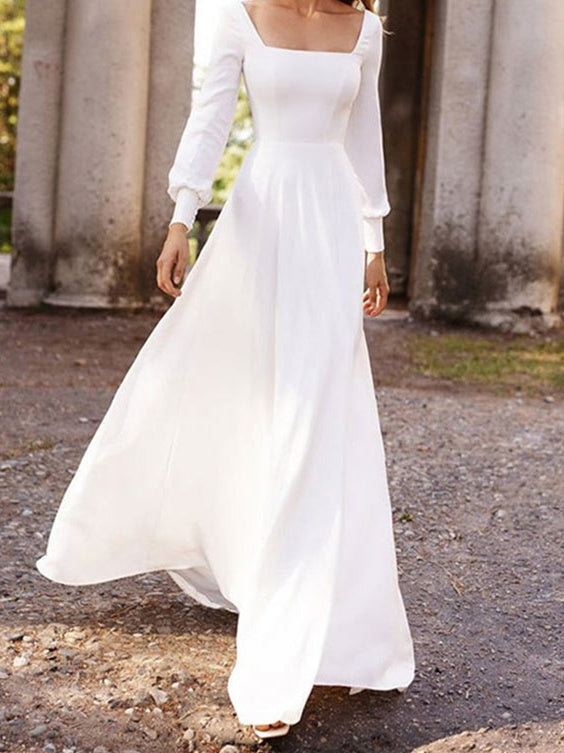
The best plus size wedding dress is the one whose structure, neckline, waist placement, and skirt volume work together for your measurements and comfort. Start with an accurate bust, waist, hip, hollow-to-floor, and height profile; then compare the size chart for each gown. A familiar street-size number is less useful than how the actual dress is cut and where alterations can refine it.
Start with measurements, not the label
Bridal sizing can feel unfamiliar because every dress is built from its own chart and construction. A number that fits in everyday clothing does not automatically translate to the same number in a wedding gown. That difference is normal and says nothing about your body.
Measure over the undergarments you expect to wear, keep the tape level, and avoid pulling it tight. The most useful starting measurements are:
- the fullest part of the bust
- the natural waist, usually the narrowest point of the torso
- the fullest part of the hips
- hollow to floor while wearing shoes of the planned height
- total height and, when useful, shoulder-to-waist length
If your measurements fall across more than one size, choose according to the part of the gown that is hardest to alter. A fitted hip on a sheath dress may control the decision, while the bust or waist may matter more in an A-line gown. The made-to-order measuring guide explains how to keep the tape and posture consistent, and the standard versus custom sizing guide helps you compare the two ordering routes.
Check the chart for the exact dress
Do not rely on a general memory of your size. Open the product page, compare every relevant measurement, and note whether the gown has a fixed zipper, adjustable lacing, sleeves, or a defined waist seam. Those details change how forgiving the fit can feel.
Plan for alterations before ordering
Most wedding dresses benefit from some tailoring. Hem length, strap position, bust shaping, and waist refinement are common adjustment areas. Build both time and budget for alterations rather than expecting the first try-on to be the final fit.
Choose structure that supports the look you want
“Flattering” is not one silhouette. The useful question is what you want the dress to do: define the waist, create a long vertical line, balance the shoulders and hips, show curves closely, or allow easy movement.
A-line dresses for flexible proportion
An A-line gown is fitted through the upper body and opens gradually below the waist. That construction can give the bodice definition without requiring the skirt to follow every curve. It is a practical starting point when you want room to sit, walk, and dance.
Ball gowns for a clear waist and more volume
A ball gown creates a stronger contrast between the bodice and skirt. The volume can feel celebratory and formal, but it also adds weight and takes up more physical space. Test how the skirt behaves on stairs, in a car, and beside your ceremony seating.
Sheath and column dresses for a straighter line
These shapes can look clean and modern, but their fit depends heavily on the hip, thigh, and fabric stretch. Review the side and back views as carefully as the front. If you want a fuller comparison, the wedding dress silhouettes guide breaks down how A-line, mermaid, ball gown, and sheath shapes behave.
Evaluate the bodice as a complete system
A neckline never works alone. Straps, sleeves, seam placement, closures, and the weight of the skirt all affect how secure the bodice feels.
Neckline depth should match your support plan
A V-neck can create a strong vertical line, while a square neck can frame the collarbone and give the front of the bodice a more architectural shape. Neither is automatically better for a fuller bust. Look at the width and depth of the opening, the strap placement, and whether your planned undergarment can remain hidden.
Sleeves need mobility, not just coverage
If you want sleeves, raise your arms, reach forward, and sit during the try-on. A sleeve that looks smooth while standing still may pull across the upper arm or back during a hug. The long-sleeve wedding dress guide covers sleeve length, fabric, and seasonal considerations in more detail.
The waist seam should meet your natural proportions
A waist seam that sits too high or low can make the entire gown feel off even when the circumference fits. Compare the shoulder-to-waist distance and ask whether that area can be altered without disrupting lace, beading, or boning.
Use fabric to control movement and visual weight
Fabric affects how a dress responds to curves, light, and motion. Satin tends to show clean planes and highlights; tulle creates airy volume; lace adds texture; and chiffon moves softly. These are visual and practical differences, not rules about which bodies may wear which material.
A structured satin can define an A-line shape clearly. Layered tulle can give volume without the same visual density as a single heavy layer. Lace placement can draw attention to a neckline, waist, or train. Review close-up photographs and full-length movement views so the detail supports the silhouette you want.
Build a useful try-on checklist
Do more than stand in front of a mirror. A wedding dress must work through several hours of movement, photographs, and changing temperatures.
- Sit in a chair without holding your breath or adjusting the neckline.
- Walk at your normal pace and take a few longer steps.
- Raise both arms as if dancing or greeting someone.
- Turn sideways and check the bodice, waist, and hip line.
- Photograph the gown from the front, side, and back in natural posture.
- Confirm what can be altered and which details limit seam changes.
- Recheck the size chart before placing the order.
Comfort is not a compromise. A secure bodice, workable skirt, and realistic alteration plan allow you to be present rather than monitoring the dress all day.
Verified Lovavere styles to compare
- Square Satin A-Line Floor-Length Wedding Dress LV30737205 offers a square neckline, defined bodice, and full-length A-line direction to compare. Its live product page lists standard sizes through 22 and a made-to-order option; verify the current chart and selections before ordering.
- Tulle A-Line Wedding Dress LV88221493 provides a second A-line reference with a lighter tulle presentation. Its live product page also lists standard sizes through 22 and a made-to-order option; use the product-specific chart for the final choice.
These are starting points for comparing neckline, fabric, and proportion. Product pages can change, so confirm the currently displayed size choices, delivery information, and policies when you shop.
Shop plus-size-friendly bridal options
Browse wedding dresses and compare each gown by measurements, construction, and alteration potential. Save the styles whose charts and proportions match your needs, then narrow the list by comfort and ceremony setting.
Frequently asked questions
Should I order a wedding dress based on my largest measurement?
Often, but the silhouette matters. Choose for the area that is most fitted or hardest to alter, then ask a qualified tailor which other areas can be refined safely.
Are A-line dresses the only good option for plus-size brides?
No. A-line is a flexible starting point, not a rule. Ball gowns, sheaths, and mermaid silhouettes can all work when their structure, proportions, and measurements align with your body and comfort goals.
Is custom sizing the same as alterations?
No. Custom or made-to-order sizing uses submitted measurements to produce the gown, while alterations refine the finished garment on your body. Some tailoring may still be helpful after a custom-size order.
How early should I choose my size?
Choose only after taking current measurements and reviewing the exact product chart. Leave enough time for production, delivery, a first fitting, and any necessary alterations rather than planning around an ideal future measurement.