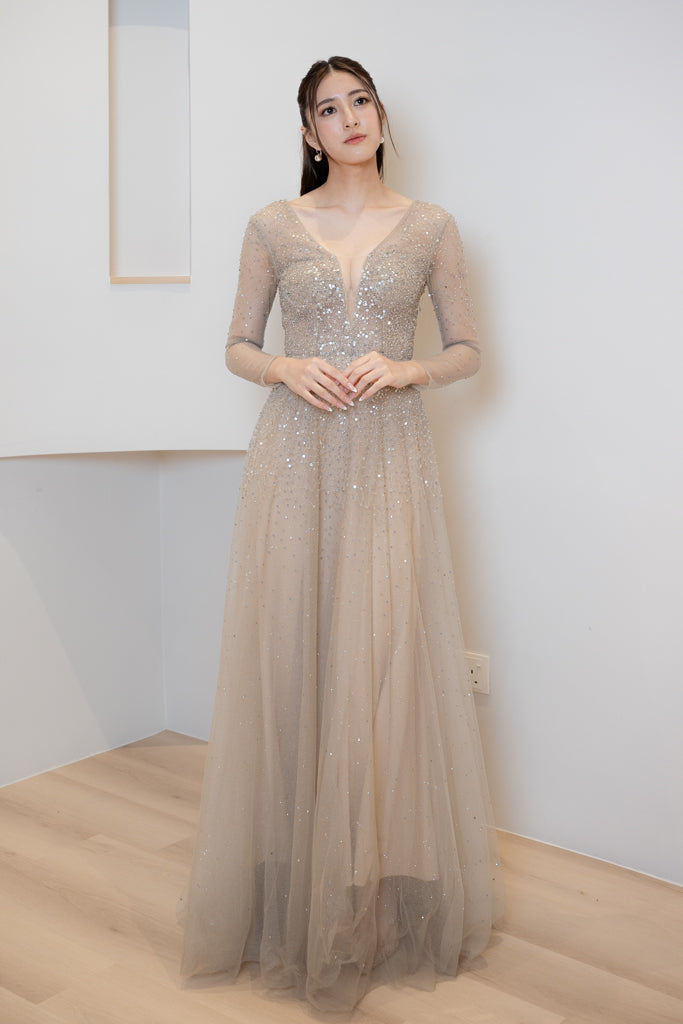
A winter mother of the bride dress should match the wedding's formality while keeping temperature changes manageable. Long sleeves and floor-length silhouettes are useful options, but indoor heating, travel, and dancing can make a very heavy gown uncomfortable. Choose the dress first for fit and dress code, then create a removable layer, footwear, and outerwear plan for cold transitions rather than expecting one garment to solve every condition.
Map the temperature changes across the day
Winter wedding advice often focuses only on the outdoor temperature. The mother of the bride may move from a heated hotel room to a cold car, an outdoor portrait session, a warm ceremony, and a crowded reception.
List the transitions:
- getting-ready location to transportation
- arrival and any outdoor waiting
- ceremony temperature and seating
- outdoor family photographs
- reception heating and dance floor
- departure late at night
This map tells you whether the dress itself needs warmth or whether removable layers are more practical. A long-sleeve gown may be ideal for a cool ceremony, while a sleeveless gown with a formal coat can be more comfortable in a heavily heated venue.
The fall mother of the bride dress guide is useful when the wedding sits on the seasonal boundary. For broader etiquette and silhouette questions, start with the mother of the bride dress guide.
Separate outdoor warmth from indoor comfort
Do not wear a very heavy dress solely for a five-minute walk from the car. A coat, wrap, or cape can protect that transition and be removed indoors.
Ask about photographs
Family portraits may happen outside even when the ceremony is indoors. Confirm the location and duration so your outer layer looks intentional in photographs rather than purely functional.
Choose sleeves for movement as well as warmth
Sleeves add coverage, but their fabric and cut determine whether they are comfortable.
Sheer or embroidered sleeves
These can add visual detail and moderate coverage without trapping as much heat as a dense sleeve. Check whether embroidery or beading feels rough at the inner arm and whether the sleeve pulls when you reach forward.
Chiffon sleeves
Chiffon can create a softer, flowing line. It offers visual coverage but limited insulation, so it should not replace outerwear for genuinely cold conditions.
Structured long sleeves
A more fitted sleeve can look polished but needs careful upper-arm, elbow, and back mobility. Perform a hug test and raise both arms. The mother of the bride sleeve guide explains how sleeve length and construction affect fit.
Match length and fabric to the dress code
Winter does not automatically mean floor-length, but many formal winter weddings suit a longer silhouette.
Floor-length for evening formality
A long gown creates a continuous formal line and protects the legs during brief cold transitions. Hem it with the final shoes so it does not drag on wet pavement or indoor stairs.
Tea-length for daytime celebrations
Tea-length can work for an afternoon ceremony, restaurant reception, or semi-formal event. Plan hosiery and footwear as visible parts of the outfit.
Fabric weight should reflect the whole venue
Velvet, heavier satin, and layered constructions can feel seasonal, while chiffon and lace can keep the outfit lighter. Embroidery and beading add visual richness without necessarily adding warmth. Read the lining and construction details rather than assuming a fabric's appearance tells you how it will feel.
Build a winter color palette
Navy, deep green, burgundy, plum, metallic silver, muted rose, and other rich colors can suit winter light. They are options, not mandatory seasonal uniforms.
Coordinate with the couple's palette and bridesmaid shade. If the wedding uses pale winter neutrals, a cool metallic or softened blue may connect better than a dark jewel tone. The mother of the bride color guide helps distinguish coordination from exact matching.
Check fabric under daylight, warm indoor light, and camera flash when possible. Beading and embroidery may reflect more strongly in reception lighting.
Plan layers as a complete outfit
A useful winter layer should fit over the gown without crushing sleeves or embellishment.
Formal coat
A clean, longer coat can protect the dress during travel and outdoor photographs. Try it over the actual gown or a similar sleeve volume.
Wrap or stole
A wrap is easy to remove but requires a hand to keep it in place. Practice holding it with a bouquet or handbag so it does not become distracting.
Cape
A cape can provide shoulder room and a ceremonial look. Check the closure against the neckline and jewelry, and make sure the length does not compete with the gown.
Keep the layer nearby during transitions instead of leaving it in a distant coat check.
Choose footwear for cold and wet surfaces
The ceremony shoe does not need to handle every outdoor condition. Wear weather-appropriate shoes for travel if necessary, then change indoors.
For the event shoe, consider:
- traction on polished or wet surfaces
- a stable heel for stairs and long standing
- enough room for hosiery if worn
- hem length with the exact shoe
- a backup option for dancing
Protect the gown from slush or rain by lifting the skirt during outdoor transitions and arranging help before leaving the venue.
Perform a heat-and-movement fitting
Wear the complete undergarment and layer plan. Sit, walk, raise your arms, and keep the dress on long enough to notice heat buildup. A gown that feels pleasantly warm for two minutes may become uncomfortable in a heated reception.
Check whether sleeves twist, the neckline shifts, or embroidery catches on jewelry. Confirm the hem and practice removing the outer layer without disturbing hair or accessories.
Verified Lovavere styles to compare
- Embroidery Long-Sleeve Mother-of-the-Bride Gown offers an embroidered long-sleeve, floor-length direction for a formal winter wedding. Its live page lists standard sizes through 22.
- V-Neck Chiffon Long-Sleeve Mother-of-the-Bride Gown LV41528947 provides a lighter-looking long-sleeve alternative with a V-neck. Its live page also lists standard sizes through 22.
Confirm the current product-specific measurements, available selections, production information, and policies before ordering. Compare the sleeves through a full range of motion and plan outerwear separately for actual cold exposure.
Shop winter-ready mother-of-the-bride dresses
Browse mother of the bride dresses and shortlist gowns that match the invitation's formality. Then compare sleeve mobility, indoor comfort, hem practicality, and compatibility with your planned coat or wrap.
Frequently asked questions
Does a winter mother of the bride dress need long sleeves?
No. Long sleeves can be useful, but a sleeveless or short-sleeve gown with formal outerwear may work better in a warm indoor venue.
What colors work for a winter mother of the bride?
Navy, jewel tones, metallics, muted rose, and many other shades can work. Coordinate with the wedding palette and check the color in the venue's likely lighting.
Can the mother of the bride wear tea-length in winter?
Yes, especially for daytime or semi-formal weddings. Plan hosiery, footwear, and outerwear as visible parts of the outfit.
What should I wear over a formal gown in winter?
A tailored coat, wrap, or cape can work. Test it over the gown's sleeve and shoulder volume, and make sure the closure does not interfere with the neckline or embellishment.